What are the different types of coffee cup lids?
Every hot drink you serve needs a lid — but not all lids are made equal. The material affects how well the lid holds heat, how secure the fit is, whether it can be composted, and ultimately what your packaging says about your brand. Understanding the four main options helps you choose the right lid for your cups, your customers, and your sustainability commitments.
Most UK cafes default to PP plastic lids because they’re inexpensive and reliable. But as more customers notice (and ask about) packaging choices, a growing number of coffee shops are making the switch to compostable alternatives — even if it means a modest cost increase.
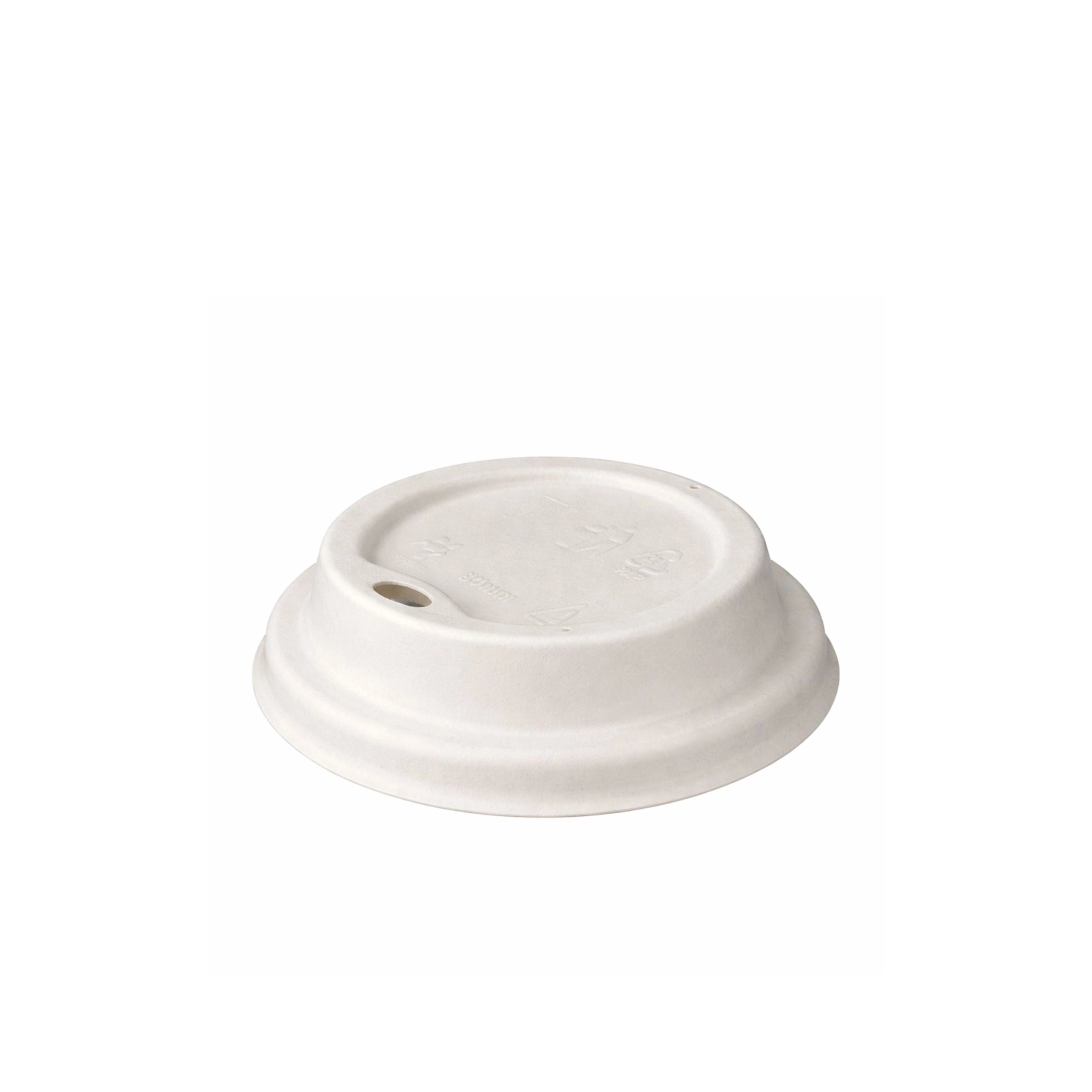
What does “sip-through lid” mean? A sip-through lid has a small pre-cut or raised drinking spout so customers can sip without a straw. Also called a “traveller lid” or “sipper lid” — the most common style for hot drinks in the UK.
How do the four lid materials compare?
Here’s a direct comparison of the four lid types across the criteria that matter most to a UK food business:
| PP (Plastic) | CPLA | Moulded Fibre | Paper | |
|---|---|---|---|---|
| Material | Polypropylene plastic | Crystallised PLA (plant-based) | Pulped plant fibre | Multi-layer paper |
| Compostable? | No | Yes (industrially compostable) | Yes (home & industrial) | Yes (home & industrial) |
| Recyclable? | Check local scheme | No (must compost) | Yes (paper stream) | Yes (paper stream) |
| Heat resistance | Excellent | Good (up to ~90°C) | Good | Moderate |
| Leak resistance | Excellent | Good | Good | Moderate |
| Relative cost | Lowest | Higher (~15–20% premium) | Higher (~15–20% premium) | Higher |
| Best for | Cost-conscious standard use | Eco cafes replacing plastic | Fully eco menus, events | Specialty coffee, premium positioning |
Which lid type should you choose for your cafe?
The right lid depends on your cup type, your sustainability goals, and your budget. Work through these four considerations:
- Match the lid to your cup size — Lids are sized by cup diameter, not volume. An 8oz single-wall cup and a 12oz single-wall cup typically use different lid sizes (8oz uses a 80mm fitting; 12–16oz share a larger fitting). Always confirm the lid diameter before ordering. LumaPack’s cup lids are sold in 4oz, 8oz, and 12–16oz sizes.
- Decide your eco position — If sustainability is part of your brand, PP plastic lids undercut your message. CPLA or moulded fibre lids let you serve compostable cups with a compostable lid. Many cafes pair CPLA sip-through lids with compostable cups for a fully certified eco setup.
- Consider your drink menu — If you serve very hot drinks (above 85°C) frequently, check that your compostable lid is rated for that temperature. CPLA handles standard espresso-drink temperatures well. Paper lids are better suited to filter coffee or slightly cooler drinks.
- Factor in the price per cup — PP lids at £16–£19.99/case of 1,000 cost around 1.6–2p per lid. CPLA lids at £34–£39.99/case cost around 3.4–4p per lid. For a cafe selling 200 cups a day, that’s roughly £2–£4 per day in additional lid cost — or around £700–£1,400 per year. Weigh this against the value to your brand.
PP lids vs CPLA lids: the most common switch UK cafes make
PP (polypropylene) lids
PP lids are the industry standard across UK cafes. They’re durable, heat-resistant, and available in black or white in sip-through and domed styles. They’re the lowest-cost lid option, and they fit reliably on most standard paper cups. The downside is that they’re single-use plastic — not recyclable in most UK kerbside schemes, and definitely not compostable.
CPLA lids
CPLA (crystallised polylactic acid) looks and feels almost identical to a PP lid but is made from plant-based material and is certified industrially compostable. It’s the most popular eco swap for cafes currently using PP lids because the customer experience is nearly unchanged. White CPLA sip-through lids and black CPLA versions are available in 8oz and 12–16oz sizes from LumaPack.
Moulded fibre lids
Made from pressed plant pulp, moulded fibre lids are both home and industrially compostable and can go in the paper recycling stream. They have a more natural, textured look that suits premium and eco-focused branding. They’re available in 8oz and 12–16oz at LumaPack — the white moulded fibre lids suit kraft or white cup aesthetics alike.
Paper lids
Paper lids are fully paper-based and can be recycled in the paper stream. They have a distinct aesthetic — often used by specialty coffee shops who want packaging that signals artisan quality. They’re slightly less leak-resistant than plastic or CPLA, so they work best for drinks served at moderate temperatures or consumed immediately.
LumaPack’s cup lid range — what’s available
LumaPack stocks all four lid types in the sizes used by UK cafes, all with wholesale pricing and free UK delivery on orders over £100.
- Black Domed PP Sip-through Lids (12–16oz) — £19.99/case of 1,000. The standard choice for most cafes serving large format hot drinks.
- Black CPLA Sip-through Lids (12–16oz) — £39.99/case of 1,000. The direct eco replacement for PP — same sip-through style, certified compostable.
- White Moulded Fibre Lids (12–16oz) — £34.99/case of 1,000. Best for fully eco menus or premium brand positioning.
- White Paper Lids (12–16oz) — £39.99/case of 1,000. Fully paper-based and recyclable — suits specialty coffee and artisan positioning.
Ready to switch your lids? Browse LumaPack’s full cup and lid range — UK wholesale pricing with free delivery on orders over £100 and 24–48h dispatch.
Three things to check before you order lids
1. Always order lids and cups together
Lid sizing is based on the rim diameter of the cup, not the cup volume. A 12oz cup from one brand may not take the same lid as a 12oz cup from another. If you’re switching cup supplier, order a small quantity of lids to test the fit before committing to a full case. LumaPack’s cups and lids are designed to work together — if you’re unsure, contact the team.
2. Check compostability certification
Not all “eco” lids are equal. Look for EN13432 certification on CPLA lids — this is the European standard for industrially compostable packaging and the one recognised by UK commercial composting facilities. Moulded fibre and paper lids typically meet this standard and are often also home compostable.
3. Factor in your local waste infrastructure
Compostable lids only deliver their environmental benefit if they actually reach a composting facility. If your customers are taking drinks away, the lid will likely go in general waste unless there’s a food waste or compostables collection nearby. If you compost in-house or have a food waste collection, compostable lids are a clear win. If not, a recyclable paper lid may be the more practical eco choice.
Summary
The best coffee cup lid for your UK cafe depends on your cup size, budget, and sustainability position. PP lids offer the lowest cost and proven reliability; CPLA lids give you a near-identical experience with compostable credentials; moulded fibre lids suit fully eco menus; and paper lids work well for premium, specialty coffee positioning. Browse LumaPack’s full cup lid range for wholesale pricing on all four types.
Frequently Asked Questions
What is the difference between PP and CPLA coffee cup lids?
PP lids are made from polypropylene plastic and are not compostable. CPLA lids look almost identical but are made from crystallised plant-based material and are certified industrially compostable. CPLA lids cost roughly 15–20% more per case but allow cafes to serve fully compostable hot drinks. Both types come in sip-through and domed styles and fit the same cup sizes.
Are paper coffee cup lids recyclable?
Yes — paper lids can go in the paper recycling stream, making them easier to dispose of responsibly than PP plastic lids. They are also home compostable. The trade-off is that paper lids are slightly less leak-resistant and may soften if exposed to a very hot drink for an extended period. They suit filter coffee and drinks consumed quickly.
Can I use CPLA lids with standard (non-compostable) paper cups?
Yes. CPLA lids fit standard paper cups by rim diameter, just like PP lids. Using a CPLA lid with a standard paper cup means the lid is compostable but the cup is not — they’d need to be separated for proper disposal. For a fully compostable setup, pair compostable cups with CPLA or moulded fibre lids.
Which lid sizes do I need for 8oz and 12oz cups?
Most UK paper cups follow standard rim diameters: 8oz cups use a smaller lid (typically around 80mm), while 12oz and 16oz cups share a larger lid size. Always check the cup rim diameter rather than relying on the volume alone, as sizing can vary between manufacturers. LumaPack’s 8oz and 12–16oz lid sizes are designed to fit the cups in its own range.
Is moulded fibre better than CPLA for eco credentials?
Both moulded fibre and CPLA lids are certified compostable and a significant improvement over PP plastic. Moulded fibre goes one step further — it’s typically home compostable (as well as industrially) and can be recycled in the paper stream. CPLA usually requires industrial composting. If you want the broadest end-of-life options, moulded fibre is the more flexible choice.