What does the lining inside a paper coffee cup actually do?
Every disposable paper coffee cup has a thin inner lining that stops the liquid from soaking through the paper and making the cup fall apart. Without this barrier layer, your coffee would be in your hand within minutes. The lining is also what makes cups liquid-tight and helps retain heat.
The type of lining a cup uses determines three critical things: how easily it can be recycled or composted, how much it costs, and how it performs under heat and pressure. For a busy UK cafe serving hundreds of cups a day, choosing the right lining is both a practical and an environmental decision.
What is PE lining? PE (polyethylene) is a thin plastic film heat-bonded to the inside of the paper cup. It’s been the industry standard for decades because it’s cheap, reliably waterproof, and heat-stable. The downside: it makes the cup very difficult to recycle because paper and plastic must be separated first.
How do PE, PLA, and aqueous linings compare?
Here’s a side-by-side breakdown of all three lining types across the factors that matter most to UK food businesses:
| PE-Lined | PLA-Lined | Aqueous-Coated | |
|---|---|---|---|
| Material | Plastic (polyethylene) | Plant-based plastic (corn/sugarcane) | Water-based dispersion coating |
| Recyclable? | Difficult — specialist facilities only | No — contaminates paper recycling | Yes — accepted by most paper mills |
| Compostable? | No | Yes — industrially compostable (EN13432) | Yes — home and industrial compostable |
| Cost (relative) | Lowest | Mid — higher than PE | Mid — similar to PLA |
| Heat performance | Excellent | Good (up to ~85°C) | Good (up to ~85°C) |
| Appearance | Standard glossy inner | Slightly matte inner | Clean matte inner |
| Best for | High-volume, cost-first buyers | Eco-focus + composting access | Recycling focus + best eco credentials |
What is PLA lining and is it actually eco-friendly?
PLA (polylactic acid) is made from fermented plant starch, usually corn or sugarcane, rather than fossil fuels. Cups lined with PLA are certified industrially compostable under EN13432, meaning they will break down in a commercial composting facility within 12 weeks. For cafes with access to a food waste or commercial composting collection, PLA cups are a genuinely good eco option.
The catch is that PLA cups cannot go into standard paper recycling. Most UK local authority recycling collections don’t accept them, and if they end up in landfill they degrade very slowly — similar to conventional plastic. The eco benefit only materialises if the cups actually reach a composting facility. For this reason, some sustainability experts now argue that aqueous-coated cups are the more practical eco choice for the average UK cafe.
What is EN13432? EN13432 is the European standard for industrially compostable packaging. Products meeting this standard must break down into CO², water, and biomass within 12 weeks under controlled composting conditions, with no toxic residue.
What is aqueous coating and why is it gaining ground?
Aqueous coating (sometimes called “water-based coating” or “dispersion coating”) replaces the plastic film with a water-based barrier applied during the paper manufacturing process. The result is a cup that performs similarly to PE-lined cups for heat and liquid resistance, but is recyclable in standard paper recycling streams — no specialist facility needed.
Aqueous-coated cups are also home-compostable in most cases, making them the most flexible end-of-life option. The UK’s packaging recycling infrastructure is improving, and as councils and paper mills upgrade their capabilities, aqueous-coated cups are increasingly being accepted. Major foodservice operators and coffee chains have been shifting to aqueous linings since 2024–2025, and the trend is accelerating.
Which cup lining should my cafe choose?
The right choice depends on your priorities, your volume, and what waste collection your business has access to. Here’s a practical decision guide:
- You want the lowest possible cost per cup — PE-lined single wall or double wall cups are your best bet. They’re widely available, reliable, and at high volume (1,000 cups per case) cost from around £0.03 per cup. They won’t win eco points, but they perform consistently. See LumaPack’s 8oz single wall white cups from £26.99 per case.
- Your cafe has access to commercial composting collection — PLA-lined compostable cups are a strong choice. You get the EN13432 certification and can genuinely claim your cups are composted. LumaPack’s 8oz compostable white single wall cups are £34.99 per case and carry the Seedling certification.
- You want the best recyclability without relying on composting — Aqueous-coated cups are the most future-proof option. They fit into mainstream recycling streams and avoid the “greenwashing” criticism that sometimes follows PLA cups used without composting infrastructure.
- Your customers are eco-aware and ask questions — Be honest about your cup choice. If you use PE-lined cups, consider a keep-cup discount. If you use PLA, make sure they can actually be composted — not just binned. Customers in 2026 are increasingly savvy about what “compostable” actually means in practice.
What about double wall and ripple wall cups — does lining type change?
Double wall cups
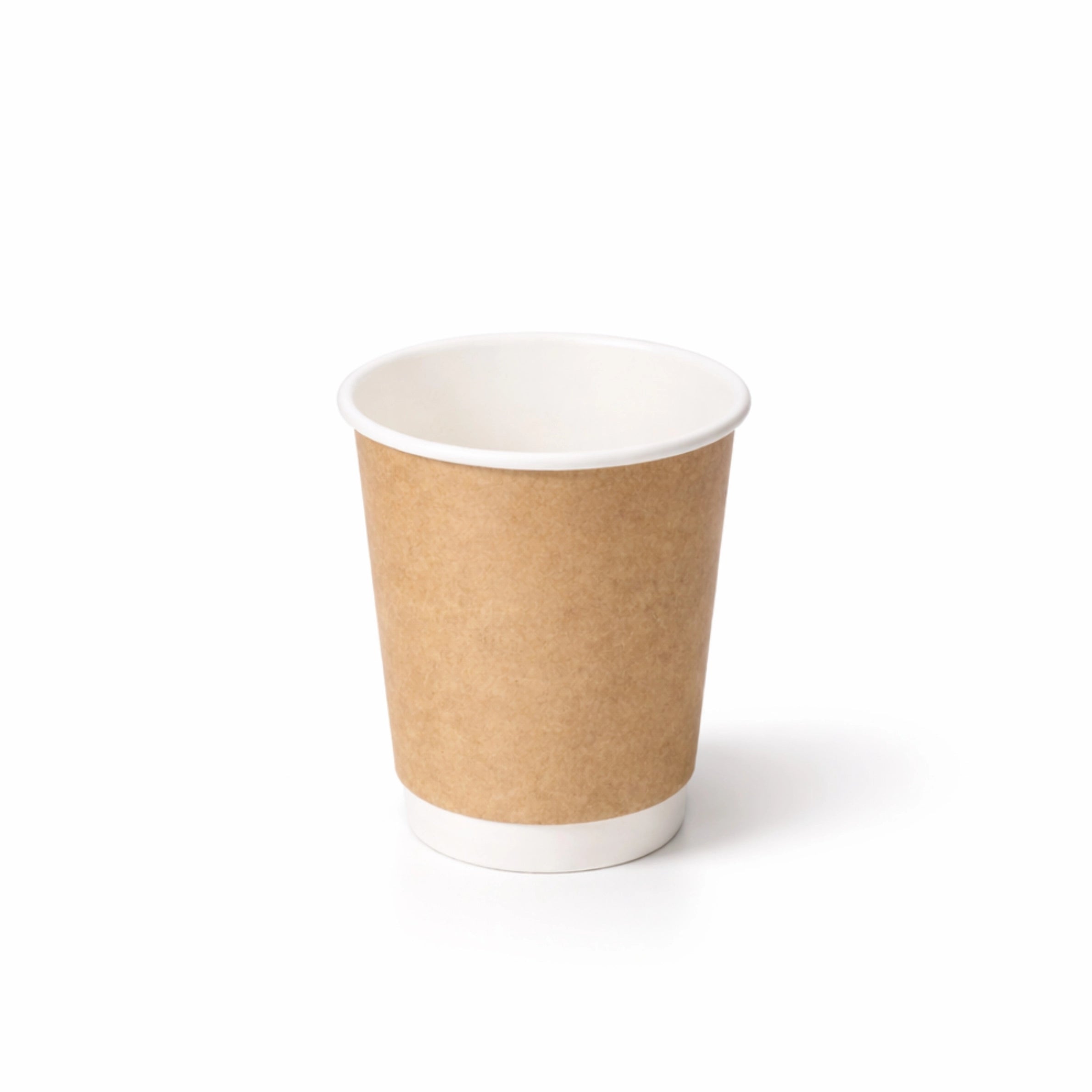
Double wall cups have two layers of paper with an insulating air gap, which means most customers don’t need a separate sleeve. They’re available in PE-lined and compostable (PLA-lined) versions. LumaPack’s 12oz compostable kraft double wall cups are a popular choice for cafes that want the premium look of kraft alongside eco credentials.
Ripple wall cups
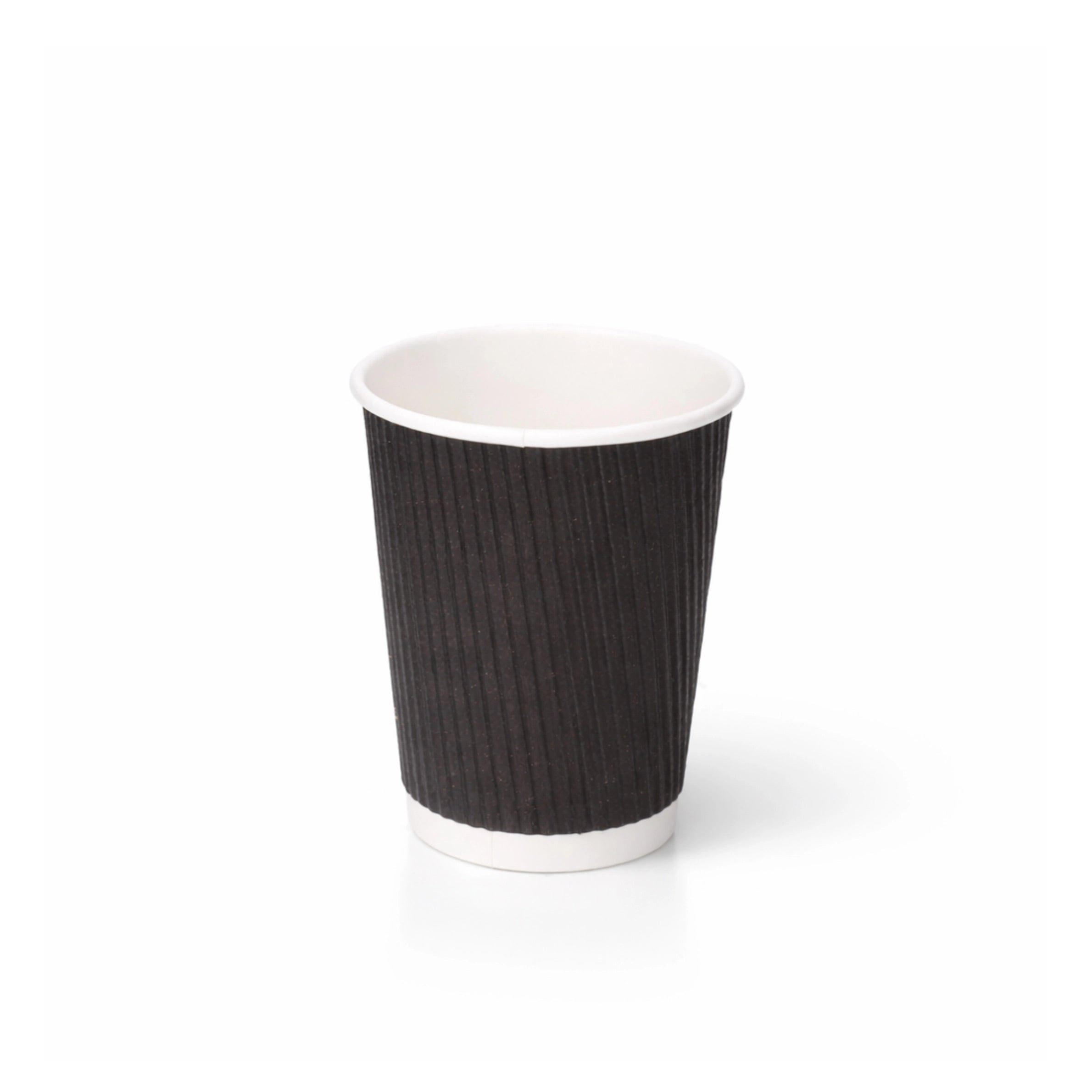
Ripple wall cups use a corrugated outer layer for insulation rather than a second layer of paper. They tend to be PE-lined, as the outer corrugation already reduces heat transfer. They’re slightly cheaper than compostable double wall cups while looking premium on the counter.
LumaPack’s range: what’s available?
LumaPack stocks all three cup types across multiple sizes and styles. Here’s a quick overview of what’s available and who each suits:
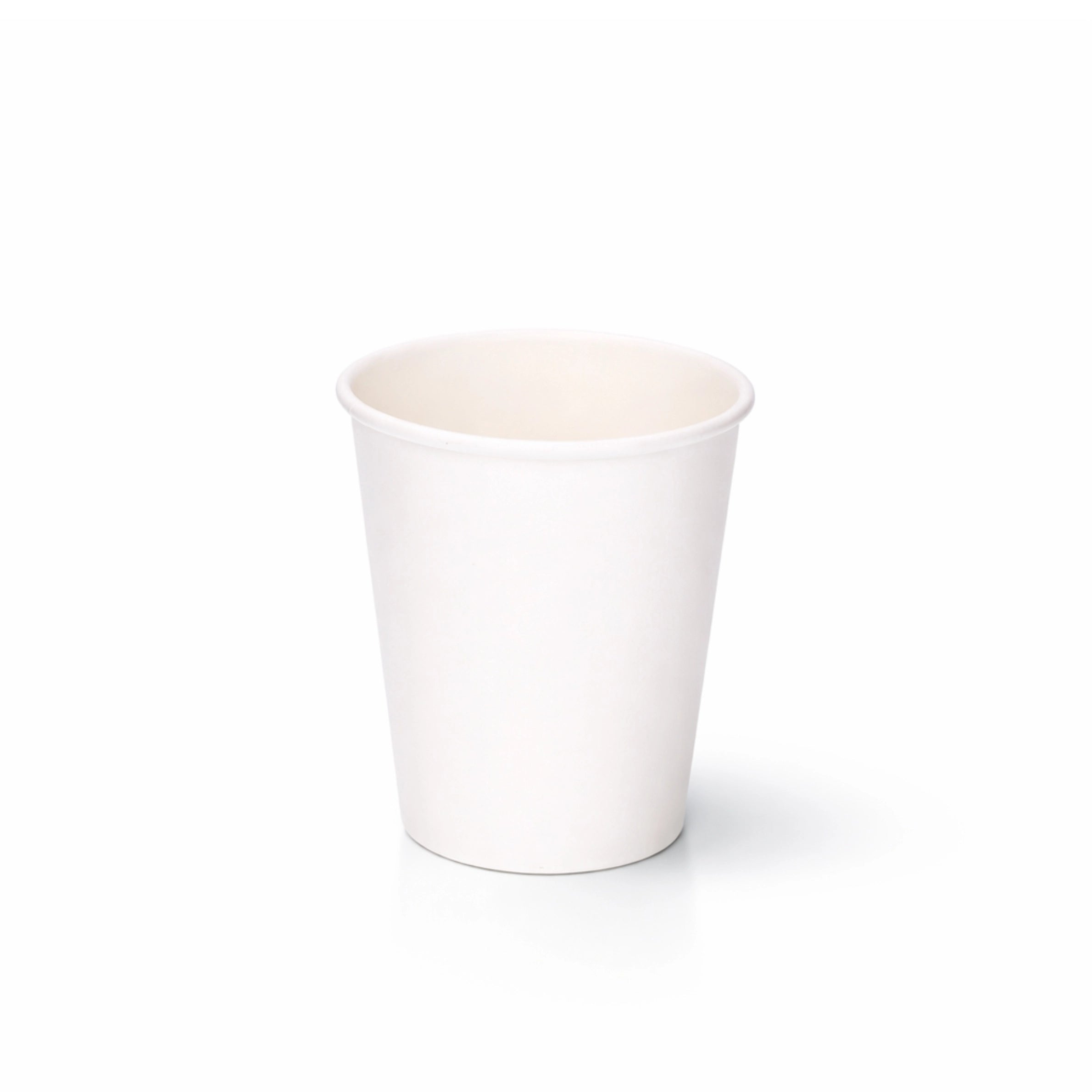
- 8oz White Single Wall Paper Cups — PE-lined, standard workhorse cup, £26.99 per 1,000. Ideal for high-volume cafes where cost is the priority.
- 12oz Compostable White Single Wall Cups — PLA-lined, EN13432 certified, £49.99 per 1,000. Best for cafes with composting collections.
- 12oz Compostable Kraft Double Wall Cups — PLA-lined, premium kraft look, £44.99 per 500. Popular with specialty coffee shops that want eco credentials and aesthetic appeal.
Ready to order? Browse LumaPack’s full range of paper coffee cups and compostable cups — UK wholesale pricing with free delivery on orders over £100 and 24–48h dispatch.
Practical tips for switching cup linings
Check your lids are compatible
When switching cup types, always verify that your existing lids fit the new cups. Cup rim diameters vary between manufacturers. LumaPack’s cups are designed to work with standard UK lid sizes — but always order a sample first if you’re switching brands.
Train your team on the disposal message
If you switch to compostable PLA cups, your front-of-house team needs to know the difference between composting and recycling — and so should your bin setup. A compostable cup put into general waste achieves nothing. If you can’t guarantee composting, aqueous-coated cups that go into paper recycling may be more honest and more impactful.
Consider the full system, not just the cup
The most sustainable choice is the one that actually completes the correct end-of-life cycle. A PLA cup composted correctly is excellent. A PLA cup landfilled is no better than PE. An aqueous cup recycled correctly is excellent. Think about the whole chain — cup, lid, sleeve, disposal route — before committing to a new lining type.
Summary
For most UK cafes in 2026, the choice comes down to: PE-lined if cost is the primary driver, PLA-lined compostable cups if you have composting access, and aqueous-coated if recyclability in mainstream streams is the priority. LumaPack stocks all options — browse the full paper cup range to compare sizes and styles.
Frequently Asked Questions
What is the difference between PE-lined and PLA-lined coffee cups?
PE-lined cups use a conventional polyethylene plastic film as the waterproof barrier, making them hard to recycle. PLA-lined cups use a plant-based plastic that is industrially compostable under the EN13432 standard. PLA cups cost slightly more but carry genuine eco credentials — provided they reach a commercial composting facility rather than landfill.
Can I recycle compostable coffee cups in my household recycling?
No. PLA-lined compostable cups are not accepted in standard household paper recycling bins because the PLA coating contaminates the paper fibre stream. They must go to an industrial composting facility. Aqueous-coated cups, by contrast, are accepted by an increasing number of paper mills and recycling collections across the UK.
Are PE-lined coffee cups banned in the UK?
No, PE-lined cups are not banned in the UK. The UK’s single-use plastics ban (2023) focused on specific items like plastic cutlery and polystyrene containers. Paper cups with PE linings remain legal to sell and use. However, regulatory and market pressure is pushing the industry toward more recyclable and compostable alternatives, and many operators are switching voluntarily.
How much more do compostable coffee cups cost than standard PE cups?
Compostable cups typically cost 20–40% more per case than equivalent PE-lined cups, depending on size and style. For example, LumaPack’s 8oz compostable single wall cups are £34.99 per 1,000 vs £26.99 for standard PE-lined cups — a difference of roughly £0.008 per cup. For a cafe serving 200 cups/day, that’s around £1.60 extra per day.
What does “Seedling certified” mean on a coffee cup?
The Seedling logo (a green sprout) indicates a product has been certified to the EN13432 standard for industrial composting by an accredited certification body such as TÜV Austria. It means the cup will fully break down in a commercial composting facility within 12 weeks. It does not mean the cup is home-compostable or recyclable in standard paper collections.