What makes CPLA different from regular PLA?
PLA (polylactic acid) is a common plant-based plastic used for cold drink cups and containers. However, regular PLA softens at relatively low temperatures — around 60°C — which makes it unsuitable for lids on hot drinks. CPLA is PLA that has been crystallised through a heat treatment process, which raises its heat resistance to around 80–90°C. This makes it suitable for use on hot coffee, tea, and other hot beverages in the temperature range served by UK cafes.
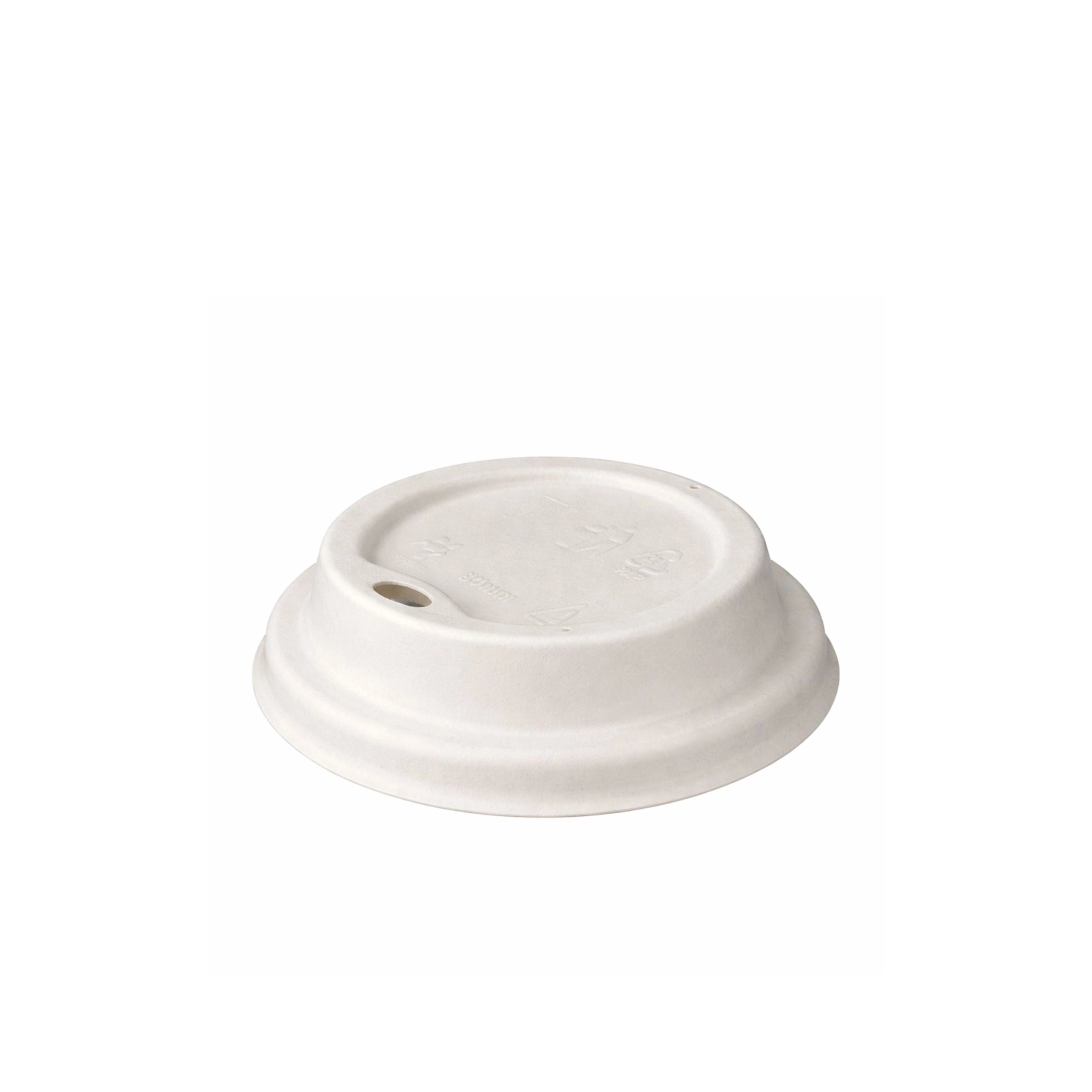
The key practical benefit: CPLA lids look, feel, and function almost identically to PP plastic lids. They have the same sip-through spout, the same secure fit, and the same smooth finish — but they’re made from a renewable, plant-based material and are certified industrially compostable.
What does “industrially compostable” mean? Industrial composting uses high temperatures (above 55°C) to break down materials rapidly. CPLA certified to EN13432 will break down within 12 weeks in a commercial composting facility. This is distinct from home composting, which operates at lower temperatures.
How does CPLA compare to PP and PLA?
| PP (Plastic) | PLA | CPLA | |
|---|---|---|---|
| Material source | Fossil fuel (petroleum) | Plant-based (starch/sugarcane) | Plant-based (starch/sugarcane) |
| Heat resistance | Excellent (>100°C) | Poor (~60°C) — not for hot drinks | Good (~80–90°C) — suitable for hot drinks |
| Compostable? | No | Yes (industrially) | Yes (industrially, EN13432) |
| Recyclable? | Sometimes (check local scheme) | No (must be composted) | No (must be composted) |
| Suitable for hot drink lids? | Yes | No | Yes |
| Relative cost | Lowest | Lower | Higher (~15–20% vs PP) |
Is CPLA the right choice for your cafe?
For cafes that want to switch from PP plastic lids to a compostable alternative, CPLA is the most straightforward option because the customer experience is virtually unchanged. Here’s when CPLA makes sense — and when it might not:
- You’re already using (or switching to) compostable cups — If you’re serving compostable cups, using a non-compostable PP lid creates a mixed-material item that can’t be composted as a unit. Switching to CPLA lids completes the eco setup and means the entire cup-and-lid combination can go into commercial composting.
- Your customers notice and care about packaging — Cafes in eco-conscious markets, university towns, or areas with strong sustainability culture will find that CPLA lids (combined with compostable cups) is a conversation-starting differentiator.
- You have access to commercial composting — CPLA must go to a commercial composting facility, not kerbside food waste collection. If your area doesn’t have industrial composting infrastructure, CPLA ends up in general waste and its compostable credentials are wasted. Check what’s available locally before committing.
- The cost difference is manageable — CPLA lids at £34–£39.99/case of 1,000 compare to PP lids at £16–£19.99/case. The difference is roughly 1.5–2p per lid. For a cafe serving 100 drinks per day, that’s about £1.50–£2 per day extra.
LumaPack’s CPLA lid range
LumaPack stocks CPLA sip-through lids in both black and white, in two sizes that cover the most common UK cafe cup formats:
- Black CPLA Sip-through Lids For 8oz — £34.99/case of 1,000. For flat whites, cortados, small lattes, and espresso drinks.
- Black CPLA Sip-through Lids For 12–16oz — £39.99/case of 1,000. For standard lattes, cappuccinos, americanos, and hot chocolates.
- White CPLA Sip-through Lids For 8oz — £34.99/case of 1,000. Suits white or natural-finish cups.
- White CPLA Sip-through Lids For 12–16oz — £39.99/case of 1,000. The white alternative for cafes with a clean, minimal aesthetic.
Ready to switch? Browse LumaPack’s full cup and lid range — UK wholesale pricing with free delivery on orders over £100 and 24–48h dispatch.
Tips for making the switch from PP to CPLA
Test the fit first
CPLA lids are designed to the same rim dimensions as PP lids, but there can be small tolerances between different cup manufacturers. Order a sample case before switching your full stock over, and physically test the fit on all the cup sizes you use. A lid that doesn’t seat properly is a spillage risk — and a customer complaint waiting to happen.
Label your bins accordingly
If you’re switching to compostable cups and CPLA lids, communicate this to your customers. A small sign near the cup station (“Our cups and lids are compostable — please use the green bin”) significantly increases correct disposal. This is especially important if you have a customer-facing composting or food waste bin.
Update your packaging messaging
CPLA lids are a meaningful eco upgrade — if you’ve made the switch, tell people. Update your social media, your menu board, or your website with a simple line about your compostable packaging. Customers who care will notice and appreciate it.
Summary
CPLA is the heat-resistant, plant-based, industrially compostable alternative to PP plastic for coffee cup lids. It’s the most direct like-for-like swap for cafes currently using PP lids and looking to reduce their plastic use. LumaPack stocks black and white CPLA sip-through lids in 8oz and 12–16oz sizes, available at UK wholesale pricing with free delivery on orders over £100.
Frequently Asked Questions
Is CPLA the same as PLA?
No. Regular PLA softens at around 60°C and is not suitable for hot drinks. CPLA is PLA that has been crystallised to withstand temperatures of 80–90°C, making it suitable for hot coffee lids. Both are plant-based and industrially compostable, but CPLA is specifically designed for hot-use applications.
Can CPLA lids go in home compost?
No — CPLA requires industrial composting at high temperatures to break down within the standard 12-week timeframe. In a home compost heap (which operates at lower temperatures), CPLA will not break down effectively. CPLA items should go to a commercial composting facility. Check what’s available in your area through your local council or waste management provider.
Do CPLA lids fit the same cups as PP lids?
Yes — CPLA lids are made to the same diameter specifications as PP lids and fit the same cup sizes. An 8oz CPLA lid will fit any 8oz cup that takes a standard 8oz PP lid, and the same applies to 12–16oz sizes. Always do a test fit when switching suppliers, as small manufacturing tolerances can vary.
Where does the plant material in CPLA come from?
CPLA is derived from polylactic acid, which is produced by fermenting plant sugars — most commonly from corn starch or sugarcane. This makes it a renewable material, in contrast to PP, which is derived from petroleum. The sugarcane or corn used is typically a co-product of food production, not grown specifically for packaging.